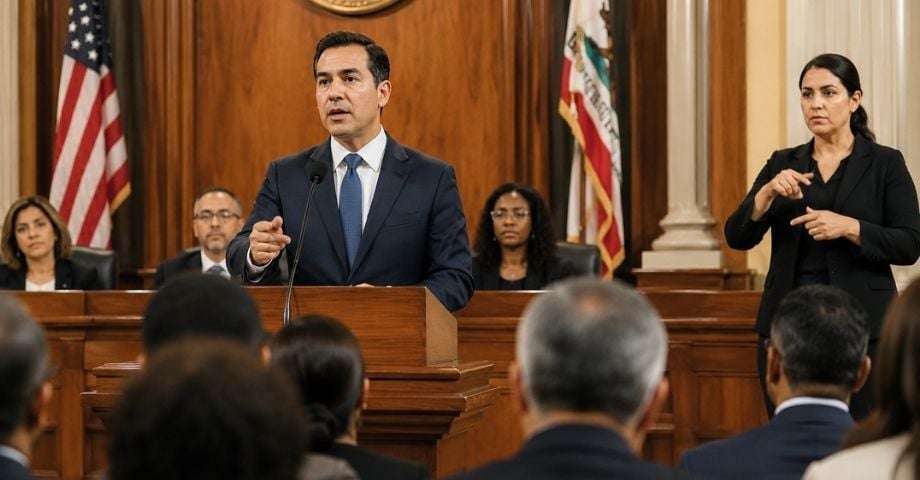
For public sector leaders, language access has evolved beyond a secondary initiative into an important component of institutional risk management. Agencies must be prepared to provide meaningful access to essential services for individuals with Limited English Proficiency (LEP), while also considering applicable requirements under Title VI, the ADA, and other program-specific regulations.
Compliance is not simply a matter of having an interpreter available. Effective language access requires a documented and operationally sound Language Access Plan (LAP) that addresses the populations served, the nature and importance of agency services, appropriate interpretation and translation modalities, qualified language professionals, and procedures for monitoring and documenting language-access activity.
Key Compliance Risk
Failing to provide meaningful access where required can result in complaints, investigations, corrective actions, and other legal or operational consequences. Agencies should therefore evaluate language access as part of their broader compliance, procurement, and risk-management framework.
A defensible language access program starts with understanding the requirements that shape it. The following framework examines the regulatory landscape, operational controls, technology and security considerations, state-level requirements, and procurement criteria that public agencies should consider when evaluating their language access infrastructure.
1. The Regulatory Landscape: Enforcement and Jurisprudence
Agencies receiving federal financial assistance must navigate a complex framework of language-access obligations. Under Title VI, the focus is on whether recipients take reasonable steps to provide meaningful access for individuals with Limited English Proficiency (LEP).
Title VI and the "Meaningful Access" Standard
Under Title VI of the Civil Rights Act, recipients of federal financial assistance must take reasonable steps to provide meaningful access to their programs, services, and information for individuals with Limited English Proficiency (LEP).
To evaluate this, the DOJ utilizes a Four-Factor Analysis:
- The number or proportion of LEP persons eligible to be served.
- The frequency of contact with the program.
- The nature and importance of the service (e.g., emergency response vs. general information).
- The resources available and the costs involved.
Enforcement Considerations: Federal agencies have investigated and resolved complaints involving organizations that failed to provide meaningful access for individuals with Limited English Proficiency (LEP) or effective communication for individuals with disabilities. Agencies should maintain documented language access procedures, qualified language providers, and appropriate service records to support compliance efforts.
The U.S. Department of Health and Human Services (HHS) Office for Civil Rights has previously entered into corrective action agreements with organizations that did not provide appropriate language assistance in critical service environments.
Section 1557 and ADA: Effective Communication
The Americans with Disabilities Act (ADA) requires state and local governments to ensure that communications with people who have communication disabilities are as effective as communications with others, as outlined in ADA effective communication requirements . When necessary, public entities must provide appropriate auxiliary aids and services, which may include qualified sign language interpreters, captioning, or other communication supports. The appropriate service depends on the nature, length, complexity, and context of the communication, as well as the individual’s usual method of communication.
Section 1557 of the Affordable Care Act establishes separate nondiscrimination and Section 1557 language access requirements for covered health programs and activities. It should therefore be considered alongside, rather than treated as interchangeable with, Title VI or ADA requirements.
2. Operational Risk Management: Beyond the Service Level Agreement
Language Network supports government agencies with more than interpretation and translation services. Our approach combines qualified language professionals, documented workflows, quality assurance, and service records to help agencies manage language-access requirements and maintain an organized compliance trail.
Strategic Modality Framework
Agencies should select the language-service modality based on the nature, complexity, urgency, and communication needs of each encounter:
| Modality | Best Use / Considerations |
|---|---|
| On-site Interpretation | Well suited to complex, high-stakes, or highly interactive encounters where in-person communication is beneficial. |
| Video Remote Interpretation (VRI) | Can provide visual communication remotely when the situation, technology, and participant needs make VRI appropriate. |
| Over-the-Phone Interpretation (OPI) | Often useful for routine, time-sensitive, or lower-complexity interactions where visual communication is not required. |
| AI / Machine Translation | May support lower-risk or high-volume workflows, but human review should be considered for vital, legally significant, or high-stakes content. |
Operational Governance and Credentialing
To support procurement readiness, Language Network maintains processes for interpreter qualification, service quality, and documentation, depending on the requirements of each engagement:
- Qualification & Vetting: Interpreters are evaluated according to applicable language proficiency, experience, credentialing, and assignment requirements.
- Quality & Documentation: Service records and quality-assurance processes can help agencies maintain an organized record of language-access activity.
- Credential Verification: Where applicable, interpreter credentials and certifications are verified against relevant state, court, or program-specific requirements.
3. Security, Infrastructure, and Government-Ready Technology
For government procurement, data protection, access controls, and secure information handling are critical considerations when selecting a language-services provider. Agencies handling protected health information, student records, or other sensitive information must evaluate the applicable privacy, security, and contractual requirements for each engagement.
Enterprise Governance & Compliance
Government language-access programs may intersect with several data-protection frameworks depending on the services provided and the information involved:
- HIPAA & Protected Health Information: The HIPAA Privacy and Security Rules establish protections for protected health information (PHI) and apply to covered entities and business associates. Covered entities engaging business associates must establish written assurances requiring appropriate safeguards for PHI.
- FERPA & Student Records: When language services involve education records maintained by educational agencies or institutions, FERPA governs the privacy of personally identifiable information contained in those records, subject to the law's applicable exceptions. [FERPA requirements for education records]
- Encryption & Access Controls: Security measures such as encryption, role-based access controls, and audit logging can help organizations protect sensitive information and manage access according to defined responsibilities. [NIST guidance on role-based access control]
- Security Documentation: Agencies and vendors should establish applicable security, data-retention, access, confidentiality, and documentation requirements as part of the procurement and implementation process.
Operational Technology & Functional Capabilities
Technology can also support the operational requirements of government language-access programs by centralizing requests, documenting service activity, and facilitating access to qualified language professionals.
- Centralized Scheduling & Request Management: A centralized scheduling system can help agencies submit, route, update, and document interpretation requests while maintaining a consistent service record.
- 24/7 Remote Interpretation: On-demand OPI and VRI can provide remote language access for urgent and scheduled needs. Language Network's current RFI documentation reports 24/7 on-demand availability, with average connection times ranging from 9.6 to 23 seconds depending on language and platform.
- Audit Trail & Service Documentation: Government agencies can benefit from workflows that document assignment details, updates, cancellations, coverage efforts, and timestamps, creating a traceable record of service activity. Language Network's Interpreter Intelligence workflow documents these activities within the scheduling system.
- Translation Management: Computer-Assisted Translation (CAT) tools can support terminology consistency, translation-memory reuse, quality control, and efficient management of recurring translation content.
- Virtual Meeting Support: Remote language services can support multilingual public meetings, training sessions, emergency communications, and other virtual engagements where the selected platform and configuration are appropriate.
4. State-Level Language Access Requirements: California and Washington
Federal requirements provide an important baseline, but state-specific requirements can add another layer of obligations for public agencies. California and Washington provide useful examples of how state-level language-access requirements can affect agency operations, service delivery, and procurement decisions.
California: Dymally-Alatorre and Program-Specific Requirements
California has additional state-level language access requirements that government agencies must consider alongside applicable federal obligations.
The Dymally-Alatorre Bilingual Services Act establishes requirements for California state agencies to provide services in languages other than English when specific conditions are met. Covered agencies also conduct language surveys to identify language needs and report the results as required by state policy.
California's language-access obligations can also vary by program and population served. For example, the California Department of Health Care Services (DHCS) incorporates Title VI, Section 1557, Dymally-Alatorre, and other program-specific requirements into its language-access framework.
For judicial proceedings, California has additional language-access requirements. California Rule of Court 1.300 defines language services for limited-English-proficient court users to include in-person interpretation, telephone interpreter services, and video remote interpreting, among other options.
Practical consideration: California agencies should evaluate their language needs, applicable federal and state requirements, the services and populations they serve, and the communications that require language assistance when developing or updating their language-access procedures.
Washington: Statewide Planning and Agency-Specific Requirements
Washington agencies must also consider state-specific requirements and planning considerations alongside applicable federal language-access obligations.
The Washington State Office of Financial Management (OFM) provides Limited English Proficiency population estimates at the state and county level to help agencies understand language needs and support language-access planning. OFM also notes that providing language access is a requirement for organizations and agencies that receive federal financial assistance.
Language-access requirements can also vary by agency and service area. For example, Washington regulations establish specific language-access requirements for certain administrative proceedings involving limited-English-proficient parties, including notice and interpreter provisions.
For public education, agencies and school districts should also consider the language-access requirements applicable to students and families, particularly when federal funding or other program-specific obligations apply.
What This Means for Government Procurement
State-specific requirements can affect more than the choice of interpreter. Government agencies should consider:
- Which populations and languages they serve.
- Which documents and communications require translation or other language assistance.
- Whether state-specific language thresholds or planning requirements apply.
- Which interpretation modalities are appropriate for different encounters.
- How interpreter qualifications and credentials are documented.
- How language-service activity, complaints, and quality are monitored.
- How language-access procedures or plans are reviewed and updated.
For government organizations operating across multiple states, a jurisdiction-specific language access strategy can help ensure that federal requirements, state requirements, and program-specific obligations are considered together.
Language Network's Regional Coverage
Language Network supports government, healthcare, education, and other public-sector organizations with interpretation and translation services across California and Washington, including on-site and remote language-access needs. Coverage varies by language, location, assignment type, and lead time. For on-site assignments, advance notice can significantly improve the likelihood of securing appropriate interpreter coverage, particularly for less common languages or specialized requests.
- Southern California: We maintain a robust on-site presence for public hearings, emergency response, and healthcare communication across Los Angeles, San Diego, and Riverside.
- Washington State: Our certified linguists support state agencies in Olympia and provide certified Seattle public sector language services for municipal engagements and school district IEPs.
5. Procurement Advisory: Vendor Evaluation Checklist
When evaluating a language access partner for public-sector compliance, procurement officers should assess whether the provider can demonstrate the following operational capabilities:
Conclusion: Building a Defensible Language Access Infrastructure
The era of treating language services as an administrative afterthought has ended. Public agencies increasingly need language-access programs that align operational delivery with civil rights obligations, data-protection requirements, and procurement controls.
A defensible language-access framework combines appropriate modalities, qualified language professionals, documented procedures, secure information handling, and ongoing monitoring. These elements can help agencies provide meaningful access while maintaining a clearer record of how language-access needs are identified, delivered, and managed.
For agencies reviewing their current language-access infrastructure, the goal should not simply be to select a language-services vendor. It should be to establish a repeatable, documented, and scalable process that can support the populations and services the agency is responsible for.