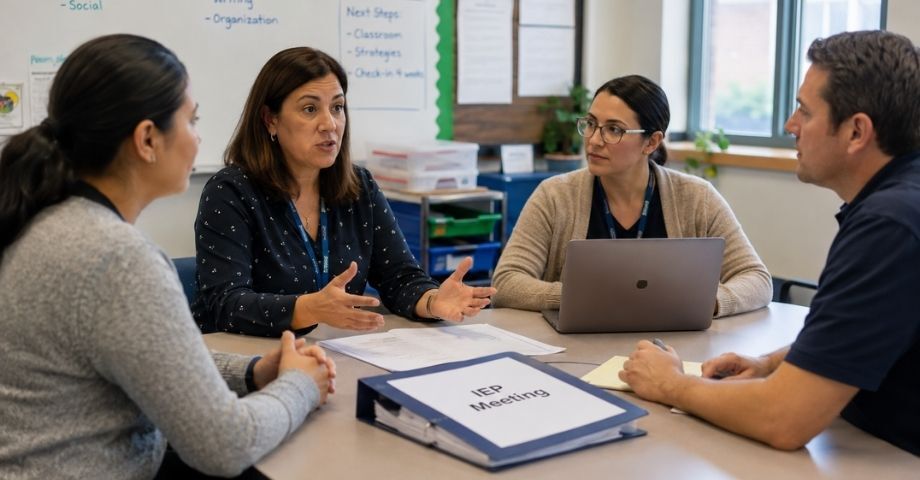
Imagine sitting in a room surrounded by school psychologists, speech therapists, and administrators, all discussing your child’s future using dense educational jargon. Now imagine trying to process all of that through a language you are still learning.
For many multilingual families, an IEP meeting can feel isolating rather than collaborative. True participation doesn't come from having someone in the room who simply speaks two languages ; it depends entirely on whether qualified, professional interpretation is available.
As school populations across the West Coast grow more diverse , providing dedicated IEP interpretation services is how districts turn a stressful legal requirement into an opportunity to build real family trust.
What are IEP interpretation services?
In K-12 schools, IEP interpretation services mean having a trained professional convert live, spoken dialogue during special education meetings. It is very different from written translation. While translation handles the paperwork—like psychological evaluations or learning assessments—interpretation is about managing the human conversation happening around the table.
Special education terminology is incredibly complex , and using a casual interpreter can lead to serious misunderstandings during major milestones:
- Speech therapy reviews: A professional ensures parents understand exactly how diagnostic metrics affect their child’s eligibility.
- Autism evaluations: Navigating these sensitive clinical findings requires emotional intelligence, not just language skills.
- Behavioral intervention plans (BIP): Parents need to know precisely what support strategies the school is proposing for the classroom.
- Placement mediation: When a family and a school team disagree, a professional interpreter keeps communication clear to help everyone reach common ground without escalating to a formal dispute.
Are interpreters legally required during IEP meetings?
Yes, public schools are required by federal law to provide qualified language support to parents with limited English proficiency (LEP) during these meetings. This obligation falls under Title VI of the Civil Rights Act and strict guidelines monitored by the Department of Justice.
A major report by the US Commission on Civil Rights on LEP language access points out that systemic language barriers in schools directly strip parents of their right to guide their child's education. The data within the USCCR language access report shows that inadequate interpretation often sparks formal civil rights complaints and long, painful delays for the student. When communication breaks down, districts risk falling into educational opportunities discrimination under the DOJ framework.
.png?width=920&height=280&name=language-services-education-banner%20(1).png)
The Data Behind Language Access Disparities in Schools
When evaluating special education compliance, numbers tell the real story. The federal findings from the US Commission on Civil Rights language access report exposed critical gaps in how public institutions handle multilingual families, showing that educational access disparities are heavily tied to the quality of language assistance.
To put the scale of this challenge into perspective, school districts should closely examine three critical metrics from the recent federal data:
- Rising Linguistic Demand: Over 5 million students in U.S. public schools are currently classified as English Learners (ELs), with West Coast states experiencing some of the highest concentrations of multilingual families in the country.
- The "Invisible" Barrier: Up to 45% of LEP parents surveyed in major metropolitan school zones reported that they did not fully understand their child’s IEP accommodations due to inadequate or informal interpretation during meetings.
- The Compliance Gap: Districts that rely on untrained bilingual staff or family relatives face a 3x higher rate of formal administrative disputes and Office for Civil Rights (OCR) complaints compared to districts using certified educational interpreters.
Why are on-site interpreters important in special education?
While a quick phone call works fine for a calendar update , complex special education meetings are deeply personal and need an in-person human connection. Choosing on-site interpretation for schools changes how families experience the meeting:
- It builds immediate trust: Having a professional interpreter physically sitting at the table shows families that the school respects them as equal partners.
- It manages the room naturally: IEP meetings have many voices—teachers, therapists, and principals. An in-person interpreter handles the back-and-forth conversational flow without awkward pauses.
- It honors emotional nuance: Hearing that your child has a learning delay is hard. On-site interpreters read body language and facial expressions, keeping the environment supportive and calm.
This face-to-face support is just as vital for Deaf or Hard of Hearing parents. Securing qualified ASL interpreting services in education settings ensures that every family has the exact same access to the conversation.
Meeting the unique language access demands of the West Coast
School districts across Washington and California face some of the highest linguistic diversity in the country.
In the Pacific Northwest, coordinating interpretation services in Seattle means supporting communities that speak dozens of languages, including Vietnamese, Somali, Arabic, and Amharic.
In Southern California, the sheer size of the population requires a highly organized approach. Today, school districts across Los Angeles continue expanding multilingual support programs to ensure hundreds of campuses run smoothly every day. At the same time, maintaining specialized Orange County language support services is essential for schools working to keep parents actively involved as demographic demands shift.
Can schools use bilingual staff instead of professional interpreters?
One of the most frequent mistakes a school can make is asking a bilingual teacher, staff member, or a family relative to interpret an IEP meeting.
Being able to chat conversationally in two languages does not mean someone knows how to interpret specialized assessments or legal educational terms. Untrained staff can accidentally give incorrect advice, step out of their neutral role, or breach student privacy laws.
Other common hurdles include scheduling language support too late—which delays the meeting and frustrates parents —and forgetting to document accommodations during regular school district language access reviews. Working with a dedicated language access partner allows schools to focus on scaling language equity across K-12 districts smoothly and without the guesswork.
Best practices for compliant IEP language access
If you want to build a truly welcoming environment where families feel safe and heard, these simple habits make a massive difference:
- Stick with educational specialists: Use interpreters who understand K-12 terminology, disability services, and school regulations.
- Book your interpreters early: Create an internal routine where school teams request an IEP meeting interpreter at least two weeks before the sit-down.
- Share draft materials ahead of time: If you can, provide key evaluation summaries in the parents' preferred language before the live meeting starts.
- Keep the same interpreter: Using the same trusted professional for a child’s annual reviews builds a beautiful bond of continuity and family trust.
Partnering for family and student success
At the end of the day, dependable language assistance isn't about avoiding an audit—it is about making sure every parent has a clear, proud voice in their child's future. When West Coast schools move away from makeshift options and choose a dedicated school district language access partner, they build a true bridge between home and classroom. That clear communication is exactly what gives every student the fair start they deserve.