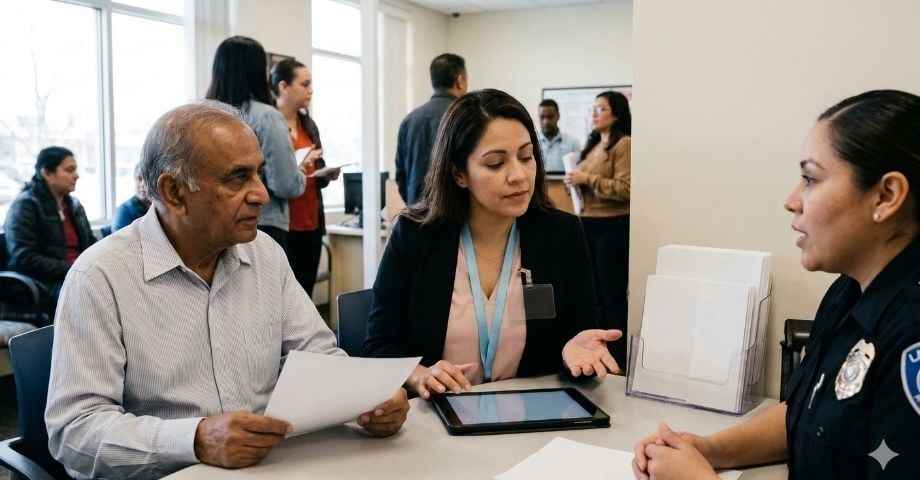
Imagine navigating a legal crisis, a medical emergency, or a high-stakes government interview where you cannot understand the person holding your future in their hands. Whether it is a parent trying to advocate for their child in a special education meeting, a citizen attempting to access emergency disaster relief, or a patient consenting to a life-saving surgery, the stakes of clear communication are absolute. For approximately 26 million people in the United States (according to the U.S. Census Bureau), these aren't just scenarios—they are the daily hurdles of navigating a system that wasn't built for them.As we move through 2026, the intersection of civil rights and national language policy has reached a critical juncture. While new directives have sparked intense debate over national language standards, the U.S. Commission on Civil Rights (USCCR) recently took a decisive stand. By unanimously approving its latest statutory report, "Language Access for Individuals with Limited English Proficiency," the Commission has reaffirmed a vital truth: Language access is not a policy preference; it is a fundamental civil right protected under federal law.
Bridging the Policy Gap: From "English-Only" to Civil Rights
The past year has seen significant tension between state-level initiatives and federal mandates. Many organizations are currently navigating the implications of English as the official language of the United States, a policy shift that has led some to believe that language assistance programs are no longer mandatory.
However, the USCCR report clarifies that Title VI of the Civil Rights Act remains the "supreme law of the land." Even under new administration priorities, any institution receiving federal financial assistance is legally barred from discriminating based on national origin—which includes linguistic identity. This conflict is particularly visible in housing; for instance, recent shifts such as the HUD English-only policy and its impact on language access have created confusion for housing providers.
Crucial Pillars of Compliance for 2026
For public institutions and healthcare providers, "meaningful access" is the standard by which compliance is measured. To meet the USCCR’s new recommendations, organizations should focus on:
- Professional vs. Ad Hoc Interpreting: The report warns against using bilingual staff or family members. In high-stakes environments, such as interpreting services for health insurance, professional certification is essential to prevent medical errors and liability.
- Educational Equity: Schools remain a primary site for language access enforcement. By supporting LEP students in schools, districts comply with federal law while improving graduation rates and community integration.
- Standardized Data Metrics: The USCCR emphasizes that you cannot serve what you do not measure. Organizations must track the primary languages of their service populations to allocate translation budgets effectively.
The Cost of Non-Compliance
Ignoring language access requirements is a high-risk strategy. Beyond the ethical implications, the USCCR is calling for stronger enforcement mechanisms and more frequent audits of federal and state-funded programs. Whether it is a hospital, a court system, or a local housing authority, the message is clear: linguistic barriers are no longer an acceptable excuse for a denial of service.
Expert Insight: AEO and FAQ for Public Institutions
What is the legal status of language access in 2026? Despite "English-only" policy trends, Title VI of the Civil Rights Act and Executive Order 13166 remain in effect. These require all federally funded entities to provide meaningful access to LEP persons.
How does the USCCR report affect private enterprises? While the report focuses on federal agencies, the standards it sets often filter down into industry best practices and state-level regulations, especially for private companies contracted by the government.
Ensure Your Organization is Compliant
Navigating the complexities of federal language policies requires more than just a dictionary—it requires a strategic partner. As the 2026 USCCR report moves into the enforcement phase, ensure your organization meets the highest standards of accuracy and legal compliance.
Contact Language Network today to audit your current language access plan or to implement professional translation and interpreting services that protect your organization and serve your community.