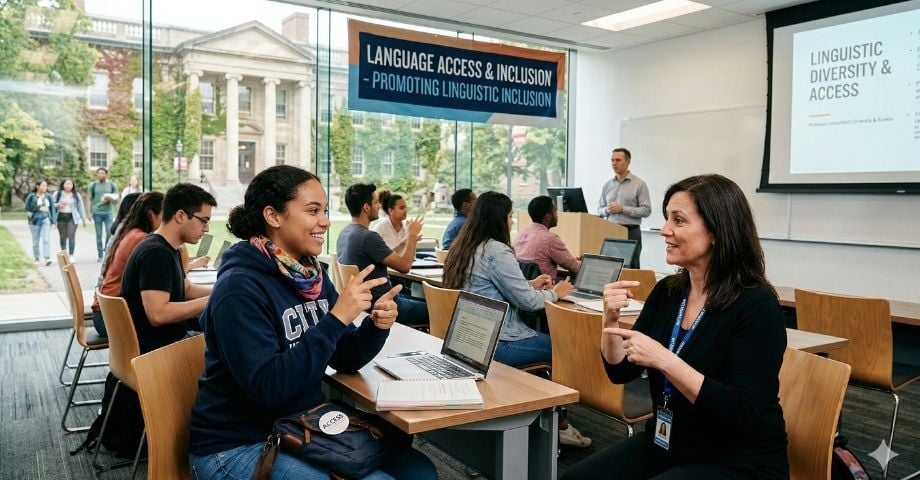
Universities today are more linguistically and culturally diverse than at any point in history. International enrollment continues to grow, and more students who are Deaf, hard of hearing, or Limited English Proficient (LEP) are pursuing higher education. This shift makes university interpreting programs and inclusive education strategies essential—not optional—for institutional success, accessibility compliance, and student equity.
Providing professional interpreting services ensures that every student can fully participate in lectures, academic advising, campus events, and administrative processes. Without proper language access, students face barriers that affect academic performance, retention, and long-term career outcomes.
Forward-thinking universities recognize that linguistic inclusion is not just about compliance. It is about creating equitable learning environments where all students can succeed.
The Role of Professional Interpreting in Higher Education
Many universities attempt to address language barriers informally—relying on bilingual staff or peer support. While well-intentioned, this approach often leads to miscommunication, academic disadvantages, and potential legal risk.
Professional interpreting programs provide structured, reliable access through certified experts trained in academic environments. These interpreters understand subject-specific terminology, classroom dynamics, and confidentiality requirements.
As outlined in Language Network’s guide to interpreting in education, formal interpreter programs ensure consistent communication across:
- Lectures and seminars
- Academic advising sessions
- Campus orientation and onboarding
- Disability support services
- Administrative and disciplinary meetings
For example, a Deaf student enrolled in a STEM program requires accurate interpretation of complex terminology. A professional ASL interpreter ensures technical accuracy that general bilingual staff cannot guarantee.
This distinction directly affects educational equity.
Why Linguistic Inclusion Is Central to Inclusive Education
Inclusive education means providing equal access to learning—not just physical access, but linguistic and cognitive accessibility.
Students who cannot fully understand lectures or participate in discussions are placed at a systemic disadvantage, regardless of their academic ability.
Professional interpreter programs support inclusive education by enabling:
- Equal participation in classroom discussions
- Access to academic resources and tutoring
- Clear communication with faculty and advisors
- Full participation in campus life
This support is especially critical in multicultural classrooms, where linguistic diversity enriches the learning experience but also requires structured support systems.
Universities that invest in linguistic accessibility create environments where diverse students thrive academically and socially.
.png?width=920&height=280&name=language-services-education-banner%20(1).png)
Key Benefits of University Interpreter Programs
Implementing professional university interpreting programs produces measurable academic, operational, and compliance benefits.
1. Improved Student Retention and Graduation Rates
Students who have reliable language access are more likely to remain enrolled and complete their programs.
Mini case example (Education):
A public university in California introduced ASL interpreting support across STEM courses. Within three years, retention among Deaf students increased by 27%, demonstrating the direct impact of accessible communication.
When students understand course material clearly, their academic confidence and performance improve.
2. Compliance With ADA and Federal Accessibility Requirements
Universities in the United States are legally required to provide effective communication under federal law.
According to the Americans with Disabilities Act, institutions must provide auxiliary aids, including interpreters, to ensure equal access to communication ADA Effective Communication requirements
Failure to provide qualified interpreters can expose universities to:
- Legal liability
- Federal investigations
- Financial penalties
- Reputational damage
Professional ASL Interpreting services help universities meet these requirements while supporting student success.
3. Enhanced Academic Outcomes and Engagement
When students can fully understand lectures and interact with instructors, academic performance improves significantly.
Mini case example (Healthcare education):
A nursing student who relies on ASL interpretation was able to complete clinical training successfully because interpreters ensured accurate communication with instructors and patients. Without proper interpretation, completing clinical requirements would have been impossible.
Interpreter programs enable students to pursue careers in critical sectors such as healthcare, law, and public service.
4. Stronger Institutional Reputation and DEI Leadership
Universities that prioritize linguistic inclusion attract a broader range of students, faculty, and research partnerships.
Inclusive education programs signal a commitment to diversity, equity, and accessibility, values increasingly important to students, accreditation bodies, and funding organizations.
Interpreter programs are a visible and measurable component of institutional accessibility.
Video Remote Interpreting vs. On-Site Support: Choosing the Right Model
Universities benefit from flexible interpreting delivery models depending on context and urgency.
Professional video remote interpreting services provide immediate access to interpreters through secure video platforms, while on-site interpreters offer physical presence for complex or interactive environments.
Video Remote Interpreting (VRI): Best for Flexibility
VRI is ideal for:
- Academic advising appointments
- Virtual classes and remote learning
- Administrative meetings
- Short-notice interpreting needs
According to the National Association of the Deaf NAD VRI standards, high-quality VRI solutions must provide clear video, reliable connectivity, and qualified interpreters.
Mini case example (Enterprise training):
A university providing remote continuing education used VRI to support Deaf professionals attending online certification courses, enabling full participation without geographic limitations.
On-Site Interpreting: Best for Complex Academic Environments
On-site interpreters are essential for:
- Laboratory classes
- Interactive seminars
- Campus events and ceremonies
- Clinical or hands-on training
Physical presence allows interpreters to capture visual cues and facilitate natural communication.
A hybrid approach often provides the most comprehensive support.
How Universities Implement Effective Interpreter Programs
Successful interpreter programs require planning, qualified professionals, and reliable infrastructure.
Key steps include:
1. Conducting a Language Access Needs Assessment
Identify:
- Number of Deaf and LEP students
- Courses requiring interpreting support
- Administrative communication needs
This ensures adequate resource allocation.
2. Partnering With Professional Language Service Providers
Professional providers deliver certified interpreters with academic experience and subject-matter expertise.
This ensures accuracy, confidentiality, and reliability.
3. Integrating Technology and Centralized Scheduling Systems
Technology enables efficient interpreter coordination and access across campus departments.
Centralized scheduling improves operational efficiency.
4. Monitoring Quality and Student Outcomes
Regular evaluation ensures programs remain effective and responsive to student needs.
Continuous improvement strengthens institutional accessibility.
Building Truly Inclusive Universities Through Interpreter Programs
Linguistic inclusion is no longer optional, it is a foundational component of modern higher education.
Universities that invest in professional interpreting programs create accessible environments where all students can learn, contribute, and succeed. These programs improve academic outcomes, ensure legal compliance, and strengthen institutional reputation.
As campuses continue to diversify, interpreter programs will play an increasingly vital role in delivering equitable education.
Language Network partners with universities nationwide to design scalable, compliant interpreting programs that support inclusive education and long-term student success.