
<img height="1" width="1" src="https://www.facebook.com/tr?id=124331694932752&amp;ev=PageView &amp;noscript=1">
Language Network Blog

-

Simplifying worldwide communication

Improve language access and reach of messaging to global audience

  • There are no suggestions because the search field is empty.
  • Content
  • All120

Language Network Ranked #35 in the 2025 Nimdzi Interpreting Index

Following the release of the 2025 Nimdzi Interpreting Index, Language Network continues to solidify its position as a global leader, officially ranking as the #35 largest interpreting company in the world. As we...

Read Now >

ASL Interpreting Services: The Guide for Healthcare, Legal, and Education

In the current professional landscape, providing ASL interpreting services is no longer a peripheral "add-on" for accessibility; it is a core requirement for operational scalability and federal compliance. For B2B...

Read Now >

ADA 2024 Digital Accessibility Rule: Is Your Organization Compliant in 2026?

In 2026, digital accessibility is no longer a "best practice"—it is a strictly enforced legal mandate. With theADA 2024 Web Rule deadlines now active for large public entities, organizations across the U.S. are facing a...

Read Now >

How Medical Interpreting Enhances Healthcare Outcomes

According to the U.S. Census Bureau, more than 25 million people in the United States have Limited English Proficiency (LEP). This demographic shift means the landscape of American healthcare is now defined by its...

Read Now >

Language Access Policies in 2026: What the USCCR Report Means for Title VI Compliance

Imagine navigating a legal crisis, a medical emergency, or a high-stakes government interview where you cannot understand the person holding your future in their hands. Whether it is a parent trying to advocate for...

Read Now >

Promoting Linguistic Inclusion in Universities Through Interpreter Programs

Universities today are more linguistically and culturally diverse than at any point in history. International enrollment continues to grow, and more students who are Deaf, hard of hearing, or Limited English Proficient...

Read Now >

ASL Interpreting in Telehealth: New Federal Guidance for Providers

Telehealth is no longer a temporary solution, it is a permanent component of modern healthcare delivery. As virtual care expands across the United States, healthcare organizations must ensure that patients with Limited...

Read Now >

Medical Localization in the U.S.: Adapting Health Materials for Diverse Communities

Medical localization has become a critical requirement for healthcare organizations operating in the United States. For many organizations, this begins with adopting structuredmedical localization services that address...

Read Now >

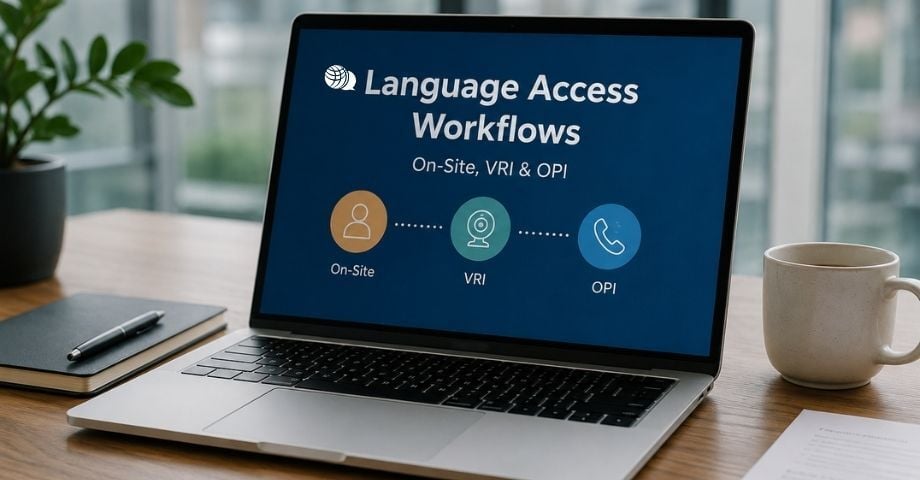
Remote & Hybrid Interpreting Solutions: VRI and Hybrid Models in 2026

Video Remote Interpreting (VRI) and hybrid interpreting solutions have become the default model for enterprise, healthcare, and public-sector language access in the United States. As the language services industry...

Read Now >

Optimizing Interpreting Access Across Public Networks

Executive Summary The Problem: A large public network faced logistical chaos and inconsistent access to qualified interpreters across healthcare, legal, and educational departments. The Solution: Language Network...

Read Now >

How to Stabilize LEP Workflows During Holiday Surges

Holiday seasons and seasonal respiratory spikes present a unique challenge for hospitals, especially when serving Limited English Proficiency (LEP) patients. During these high-demand periods, communication barriers can...

Read Now >

ASL Interpreter vs Translator: What’s the Difference?

Understanding the distinction between an ASL interpreter and an ASL translator is crucial for any U.S. organization that serves Deaf and Hard-of-Hearing individuals. Whether your institution is a public agency, school,...

Read Now >

Subscribe to our Blog!